Case studyAI systems4 min read
How AI took over the project busywork
Our client’s PMO was spending much of its week collecting updates, chasing replies, and keeping project records current. Employees were drawn into that process through status requests and tasks that sometimes served the PMO’s overview more than their own work. We built an AI coordinator that works from the team’s existing communication, turns relevant information into tasks and updates, and learns from individual feedback. It took over routine upkeep while the team shifted more attention toward delivery, project decisions, and strategy.
Taking over the administrative work
Before the rollout, the PMO estimated that the coordination activities below occupied 80% of its working time. Collecting updates and chasing follow-ups were the largest demands, while maintaining tasks took relatively little time and changed least. We connected the coordinator to Slack, Telegram, email, and meetings so it could maintain project context from information the team was already sharing. Standup preparation fell to roughly 1% of PMO working time, alongside reductions in collecting updates, chasing responses, and other coordination work.
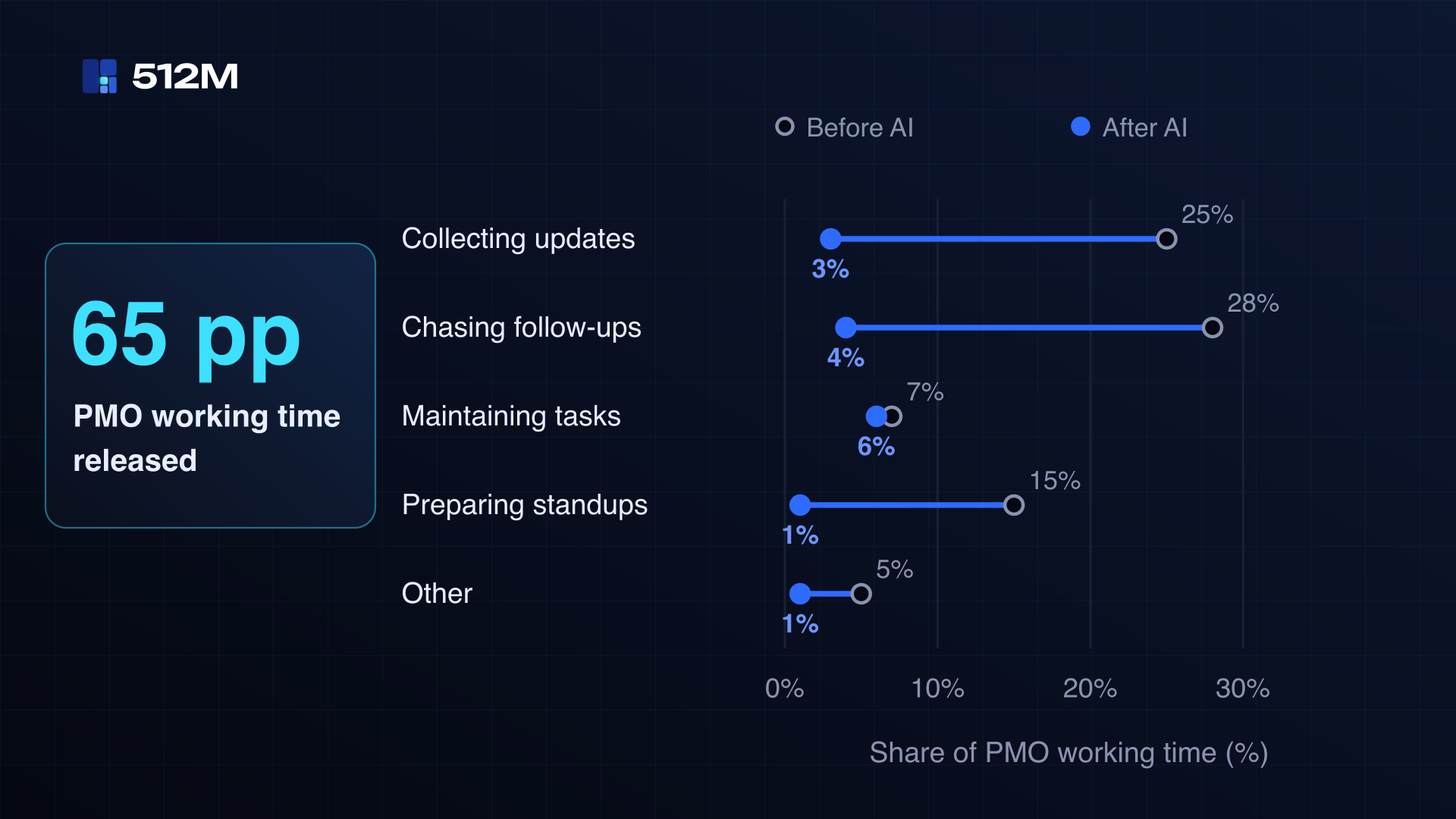
The 80% baseline is client-reported; detailed category allocations and the post-AI total remain provisional.
Chasing followed a familiar weekly rhythm: Monday’s requests helped plan the week, while Friday’s helped close it. Between those checkpoints, the coordinator gathered context from ongoing communication and kept tasks, projects, and timelines up to date. The client saw the largest reductions in chasing midweek, particularly on Wednesday and Thursday. That changed the PMO’s role in the process: less time asking people to repeat information, and more time using the project record to identify what needed attention.
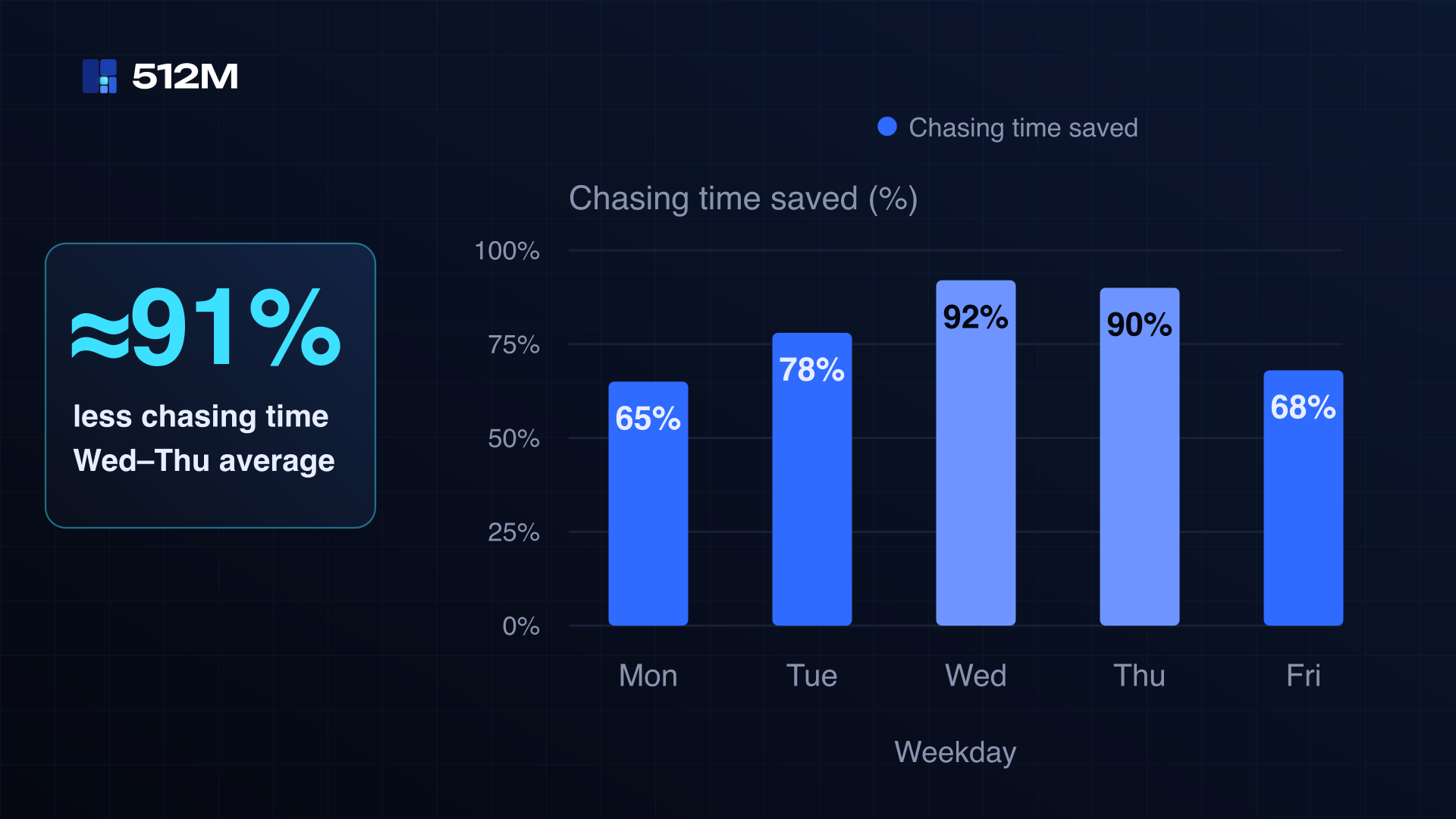
Weekday percentages are provisional estimates of the reported pattern, relative to each day’s pre-AI chasing time.
Learning how employees actually work
Automating the existing process would have preserved one of its weaknesses: tasks created primarily to make work visible to the PMO. Some employees questioned why they had been assigned small follow-ups that they did not consider worth tracking separately. We used their feedback to adapt individual LLM skills and prompts, while training decision models to distinguish new tasks from updates to existing work. This allowed the coordinator to learn different preferences rather than apply the same task-creation rules to everyone.
The client’s figures put correct and on-time assignment at 62% before AI and 92% afterwards. Employee feedback gave us context for that improvement, including objections to why a task existed rather than simply who owned it. We used those responses to refine how the system interpreted each person’s work and decided what should be recorded. The comparison measures correct and timely assignment; the wider design goal was to make project coordination useful to the people receiving the tasks, as well as those overseeing them.
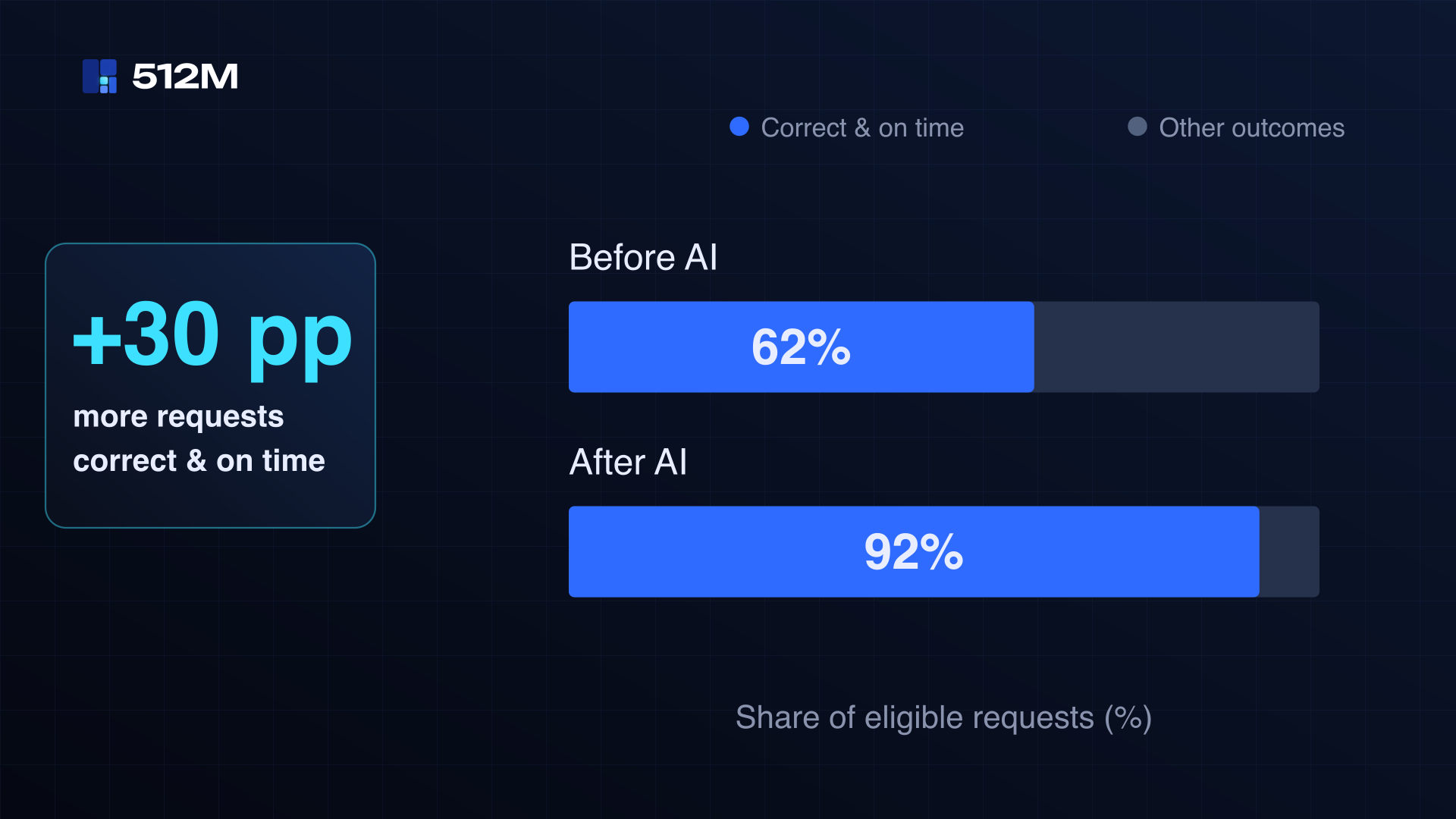
Client-reported figures for correct and on-time assignment.
Moving the focus to projects and deliverables
Employees reported spending 53% less time on administration, leaving more room for delivery work. That reduction is relative to their previous admin time, rather than their entire working week. For the PMO, less routine maintenance meant more attention could go toward higher-level project decisions and strategic thinking. The two roles benefited differently: employees had less coordination to perform, while the PMO had less information to collect and organise manually.
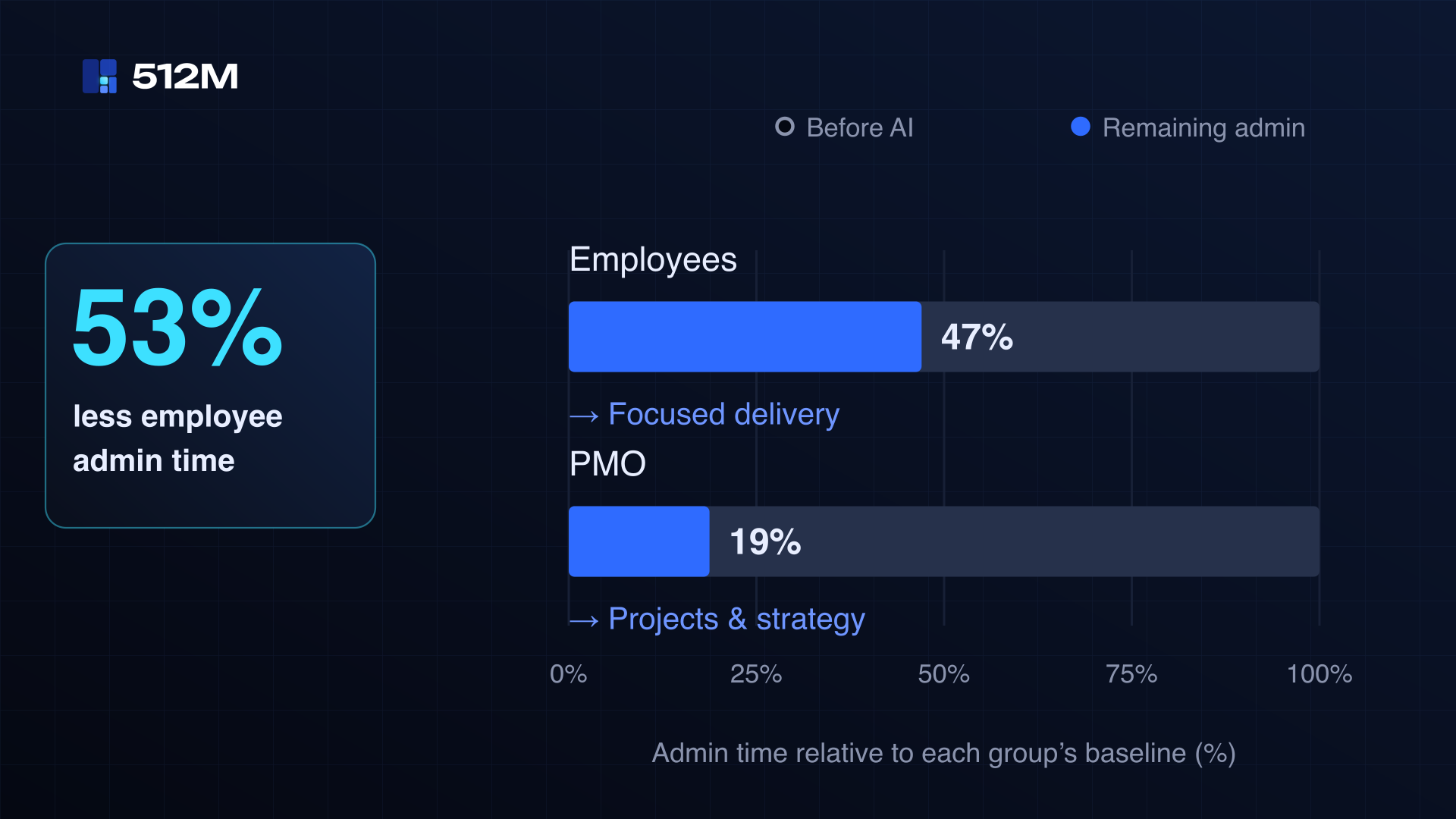
Admin time is indexed separately for each group. The employee reduction is reported; the PMO value uses Chart 1’s provisional allocation.
The management focus also moved from task counts and churn toward projects and deliverables. The PMO still had to decide which commitments mattered, where dependencies were blocking progress, and when scope or ownership needed to change. Those responsibilities remained with people, while the AI handled more of the work required to maintain an accurate project record. For this client, that was the practical shift: less routine administration and more attention to the decisions that move projects forward.